What to include in a technical workforce brief
A clear brief improves the quality of the first conversation and reduces avoidable rework.
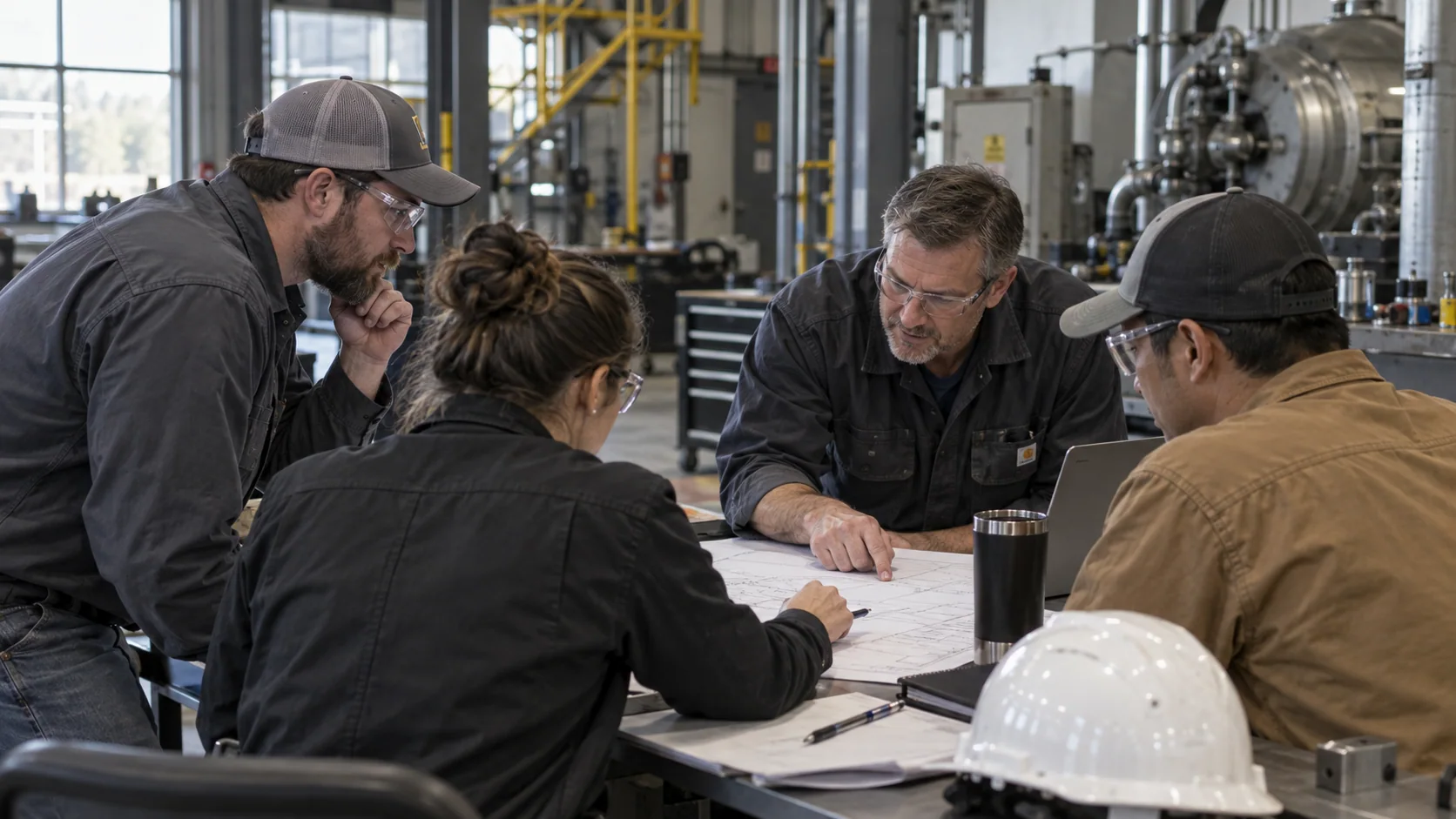
Start with outcomes
Describe the job and the environment before listing titles. ‘Mechanical fitters for conveyor installation on a live production site’ communicates more than ‘five mechanics’.
Add constraints
Location, dates, shift pattern, certification, language, tools and access all affect the proposal. Identify which conditions are essential and which can be discussed.
Keep the commercial model open
Different assignments can require different contractual arrangements. Agree the scope, responsibilities and documentation before confirming deployment.
Show what competence means on this site
A job title alone does not tell a supplier which experience matters. Specify the equipment, process or material, then list essential qualifications separately from useful experience. For example, a welding brief should identify process, position, material and any test or certificate the work requires. A maintenance brief can name the equipment family, fault-finding scope and shift environment. Ask for evidence relevant to the task, not a stack of unrelated certificates.
Give a concise first brief
A practical first message can fit on one page: work package; location; planned start and duration; number of people; trades and essential qualifications; working hours; languages needed for safe communication; tools and PPE available on site; and the person responsible for technical questions. Mark unknowns openly. They can be clarified in the first call instead of guessed by either side.